Thinking About Canning? Here's the Pressure Canner You Actually Need to Start
So you're interested in canning… filling jars with tomatoes, beans, soup, keeping the summer on a shelf for the winter. But then you go looking, and you see a pot that costs $400, and it's enough to scare you away before you even begin. Here's the truth: you don't need the expensive one to start. But you do need to understand what you're buying, so let's talk it through.
This post contains affiliate links. We may earn a commission from qualifying purchases at no extra cost to you.
Why Do I Need a Pressure Canner at All?
Some of you are thinking, my grandmother used a big pot of boiling water, why do I need anything fancy? And that's true, for certain foods, jams, pickles, tomatoes with enough acid, a water bath is fine. But for beans, meat, soups, anything low in acid, the water bath doesn't get hot enough to kill what needs killing. You need real pressure, real heat, or you risk making your family sick. Not being dramatic, that's just how it works.
The Investment Piece:
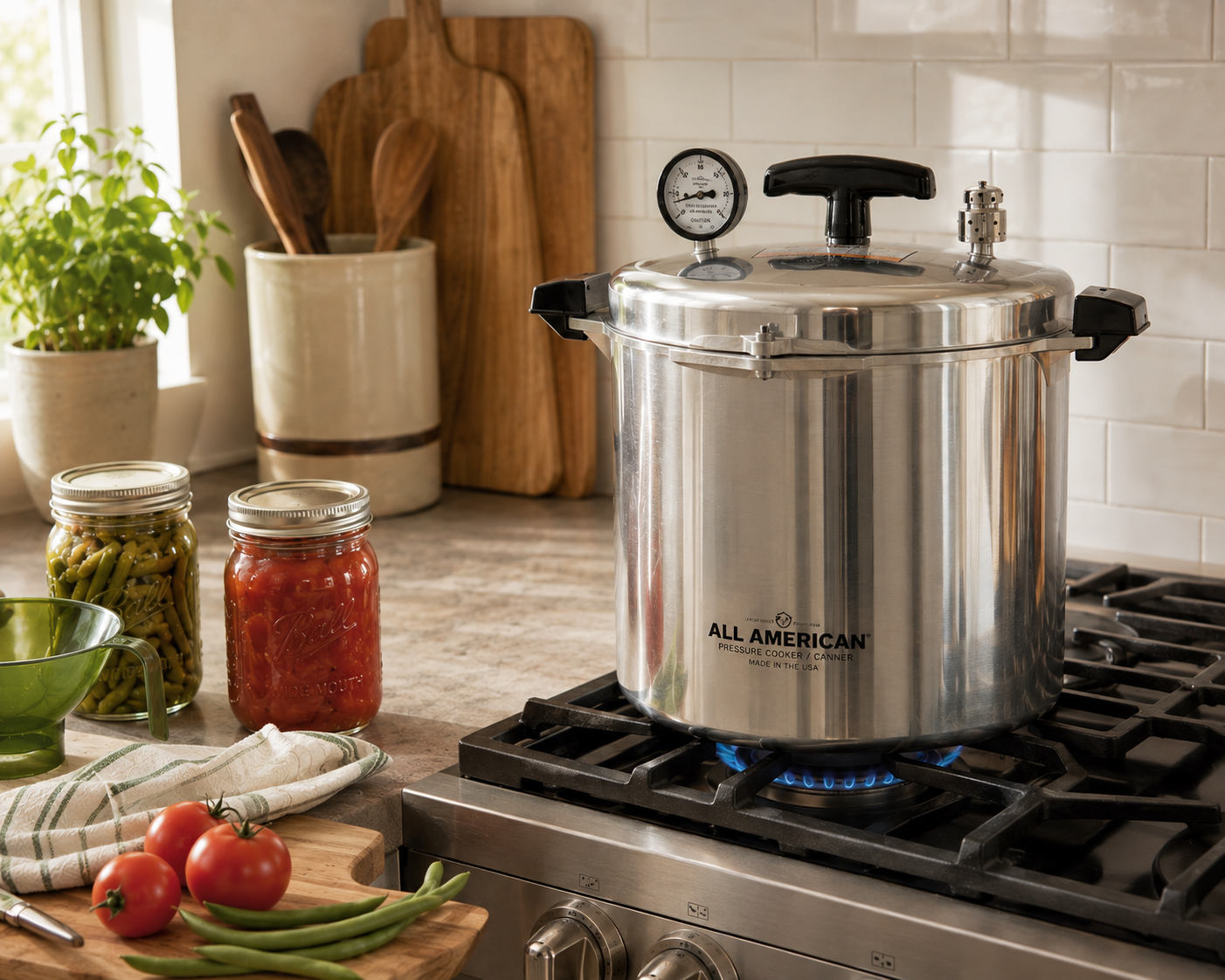
All American Pressure Canner
This one, the All American, is the pot you buy once and hand down to your grandchildren. No gasket to wear out, no rubber ring to replace every few years, just metal against metal, sealed tight. People who own this one keep it for thirty, forty years, and it still works like the day they bought it.
Worth knowing upfront: the lid locks with a series of clamping wing nuts around the rim instead of a simple lock, and some first-time users say it takes a batch or two to find the right heat setting on their particular stove for steady pressure. After that, most people say it settles into being just as easy as anything else.
The real tradeoff: it costs more, around $400. This is for someone who already knows canning is going to be part of their life, not just something they are trying out on a whim for fun.
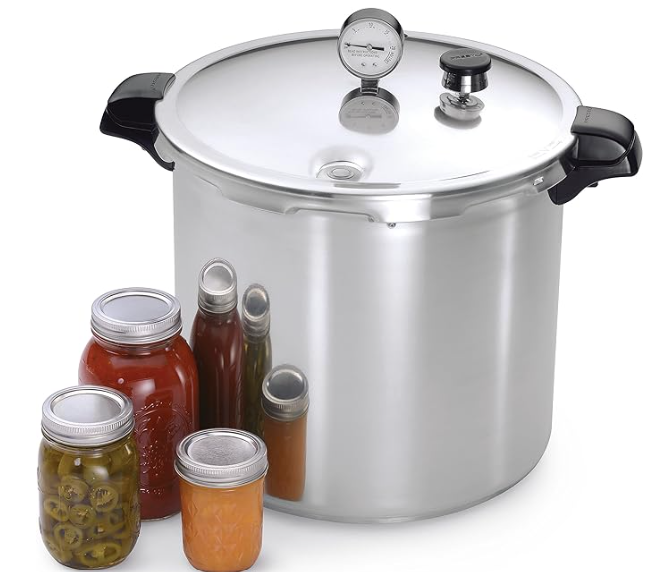
The Beginner Piece: Presto Pressure Canner
This one, the Presto, is what most people actually start with, and there's no shame in that. It has a gasket, which you'll replace every few years, but it does the job well, it's trusted, and it costs a fraction of the All American.
It's generally considered the easier of the two to learn on, the seal is simpler to lock and release, and it tends to come up to pressure a bit quicker, so there's less guesswork on your first few batches.
Like most pressure canners, it also doubles as a boiling water canner for high-acid foods like jams and pickles.
If you're not sure yet whether canning is going to be your thing, start here. You can always upgrade later once you know.
So Which One is Right For You?
If this is your first summer trying it, get the Presto. Learn the process, fill a few jars, see how it feels to open a jar of your own tomatoes in January. If after a season or two you know this is something you'll do every year for the rest of your life, then save up for the All American, the one that will outlive you.
One word of caution: don't guess at your canning times, don't skip steps because you're in a hurry. Follow a real, tested recipe, from the USDA or your local extension office, every single time. This is not the place to improvise.
The Quick Breakdown
| All American Pressure Canner | Presto Pressure Canner | |
|---|---|---|
| Price | $400+ | About $100 |
| Seal type | Metal-to-metal, no gasket | Gasket, replaced every few years |
| Best for | Serious, long-term canners | Beginners trying it for the first time |
| Lifespan | Decades, often passed down | Several years with proper care |
| Weight | Heavier | Lighter, easier to handle |
| Made in | USA | USA |
