Best Cutting Boards 2026: A Guide to Picking the Right One for You
As an Amazon Associate, I earn from qualifying purchases. This post contains affiliate links, which means I may earn a small commission at no extra cost to you if you buy through them.
Trying to figure out the best cutting board can send you down a rabbit hole fast. Wood? Plastic? Bamboo? That fancy titanium one all over your feed? Here's the truth: there's no single "best" cutting board, there's only the best one for how you actually cook. Let's break it down so you can stop overthinking it and just buy the right one(s) for you!
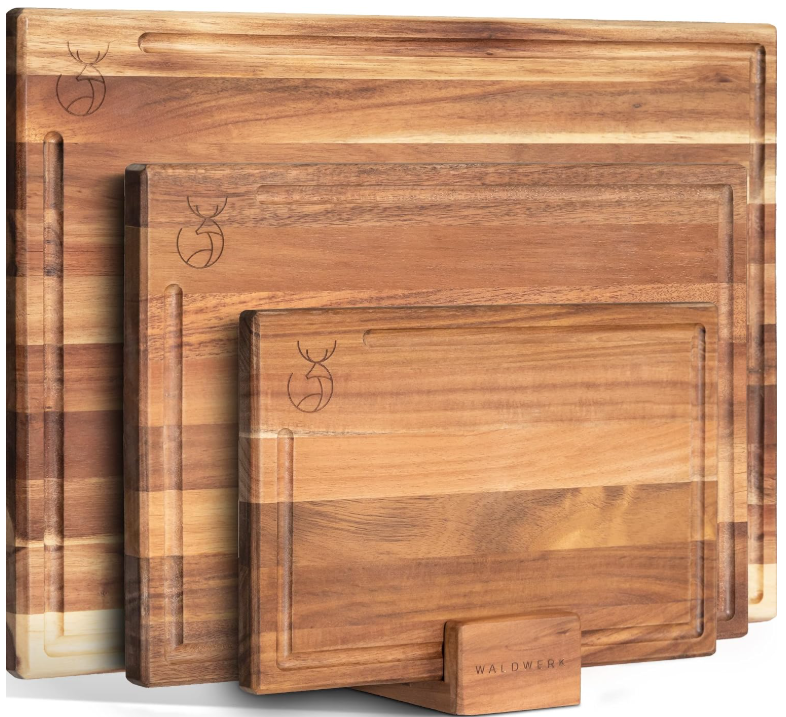
Wood Cutting Boards:
The Everyday MVP
Wood is the classic for a reason. End-grain hardwood boards (think maple, walnut, teak) are easy on your knife edges, so your blades stay sharper for longer. Bonus: wood actually has natural antibacterial properties, since the fibers trap bacteria below the surface where it dies off instead of spreading around.
If you only want one board and you cook at home regularly, an end-grain wood cutting board (maple, walnut, or teak) is the best all-around pick. It's gentle on your knives, looks great, and lasts for years if you take care of it.
Why people love it:
Knife-friendly
Looks amazing on a counter
Can be sanded down and refreshed for years
The catch:
Needs regular oiling (don't skip this)
Can't go in the dishwasher
Absorbs moisture/odor if you neglect it
Best for: daily cooking, knife nerds, anyone who wants a board pretty enough to double as a serving board.
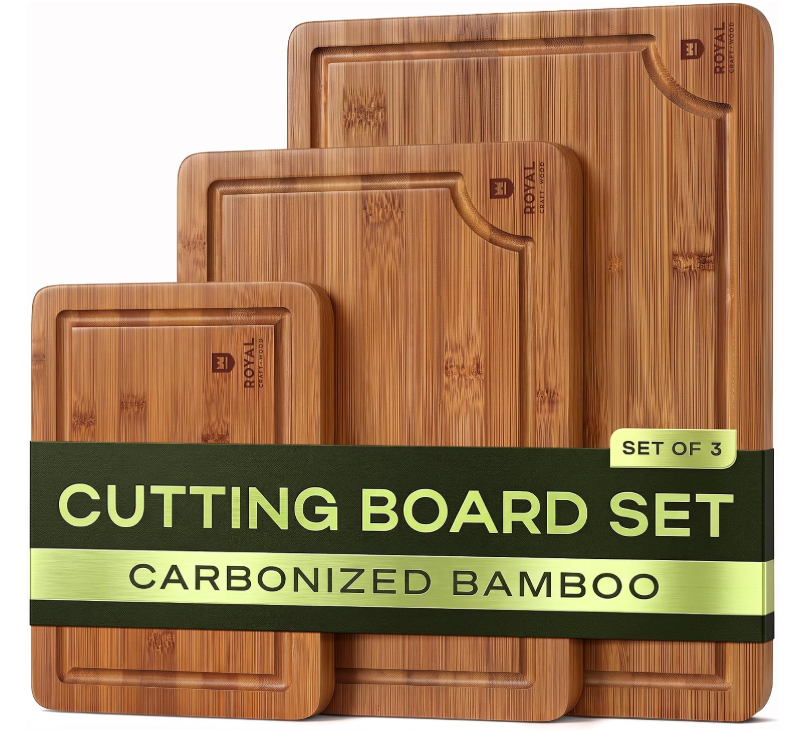
Bamboo Cutting Boards: The Eco-Friendly Middle Ground
Bamboo isn't technically wood, it's a grass, and it grows back crazy fast, which makes it one of the more sustainable options on this list. It's also harder than most hardwoods, so it holds up well, though that extra hardness means it's a little tougher on your knives.
Why people love it:
Sustainable and renewable
Durable and moisture resistant
Usually cheaper than hardwood
The catch:
Harder on knife edges than wood
Can splinter if you don't care for it
Less forgiving if you drop something heavy on it
Best for: anyone who wants an eco-conscious pick without going full plastic.
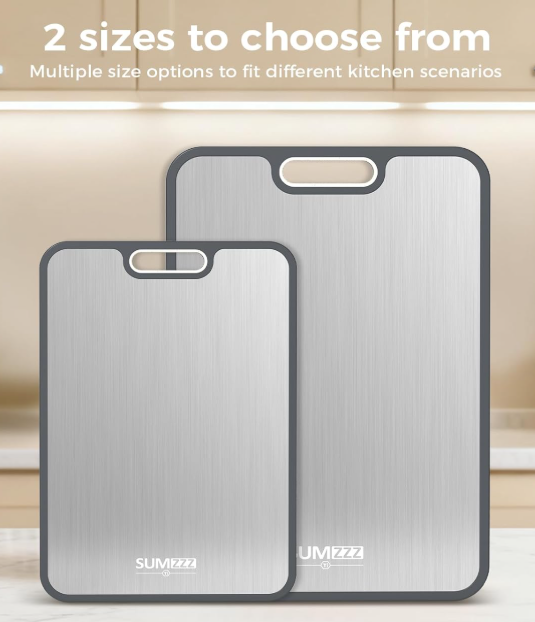
Titanium or Metal Cutting Boards: Best for Hygiene, Not Great for Knives
Metal boards, especially titanium, are having a moment right now, and for good reason: they're non-porous, ridiculously easy to sanitize, and basically indestructible. The tradeoff is real, though. Hard metal surfaces dull your knives faster and can be loud to cut on.
Why people love it:
Nearly indestructible
Super easy to clean
Resists odor, stains, and heat
The catch:
Dulls knives faster than any other option
More expensive
Can be loud
Best for: people who care more about hygiene vs babying their knives.
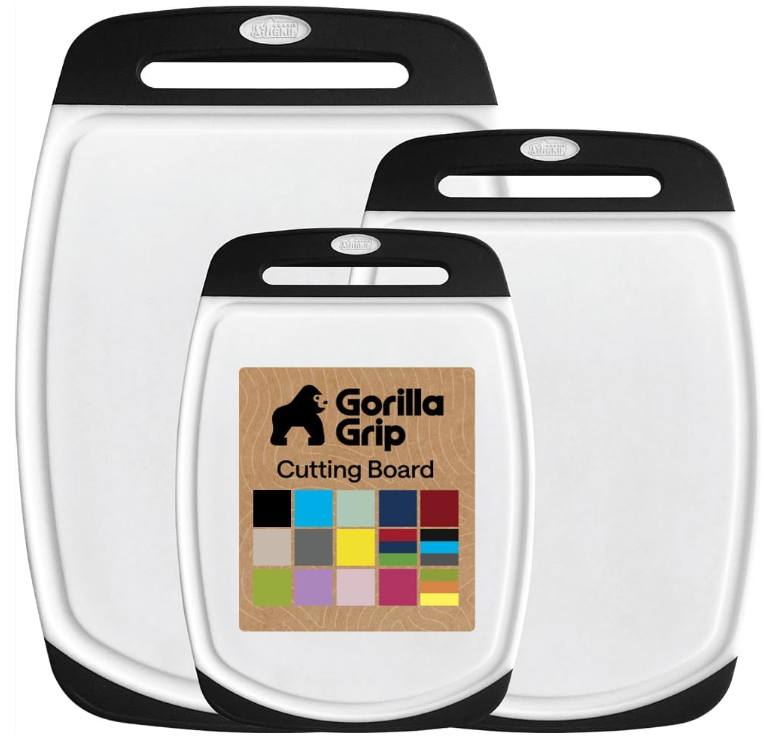
Plastic Cutting Boards: Best Budget Pick (and Best for Raw Meat)
Cheap, light, and dishwasher-safe. Plastic boards are the workhorse of the kitchen. A lot of home cooks keep a couple of color-coded plastic boards just for raw meat and poultry, which honestly is one of the smartest food safety habits out there.
Why people love it:
Super affordable
Dishwasher safe
Easy to swap out when worn
The catch:
Knife grooves build up fast and get hard to fully clean
Needs replacing every year or two
Not exactly a countertop showpiece
Best for: raw meat prep, tight budgets, or anyone who wants a dedicated "dirty board" separate from their nice one.
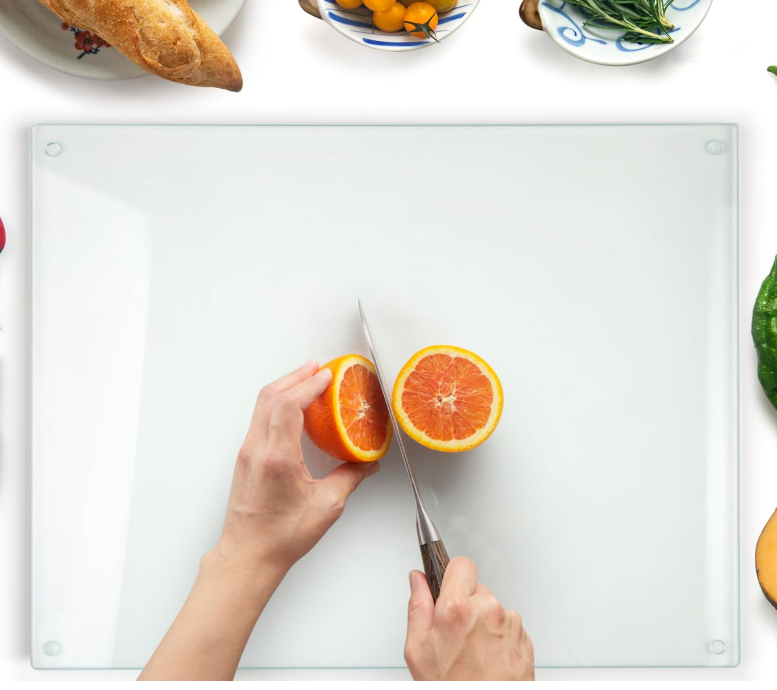
Glass and Stone Cutting Boards: Skip These for Actual Cutting
Cute for a cheese board. Terrible for chopping. Glass and marble are brutal on knife edges and can even cause your blade to slip mid-cut since there's zero give in the surface. Save these for serving, not slicing.
Frequently Asked Questions
What's the most hygienic cutting board material?
Non-porous materials like plastic and titanium are the easiest to fully sanitize since they don't absorb liquid the way wood does.
Is wood or plastic better for cutting boards?
Wood is gentler on knives and naturally traps bacteria below the surface, but plastic is cheaper, dishwasher-safe, and better for raw meat prep. Most kitchens benefit from having both.
Do titanium cutting boards ruin knives?
They can dull knife edges faster than softer materials like wood or plastic, so if you own quality knives, plan on sharpening them more often with a titanium board.
How many cutting boards should you actually own?
Two or three is the sweet spot for most home kitchens: one wood or composite board for everyday prep, plus a dedicated plastic board for raw meat.
Bottom Line
Stop searching for one perfect board. The real answer is matching the material to how you cook. Daily home cooking who cares about knives? Go wood. Raw meat and budget-friendly? Plastic. Want low maintenance that lasts forever? Titanium. Most kitchens end up happiest with two boards working together instead of one board trying to do everything.
